COMMITTEE CONSIDERS MEASURES CONSIDERING THE DISPOSAL OF GREEN WASTE, VI LOTTERY OPERATION, COMMENDING FORMER VI INSPECTOR GENERAL, LIABILITIES ON BUSINESSES FOR OVERSERVING ALCOHOL TO PATRONS, CLOSING BUSINESSES THREATENING PUBLIC SAFETY
Published: Mar 23, 2026
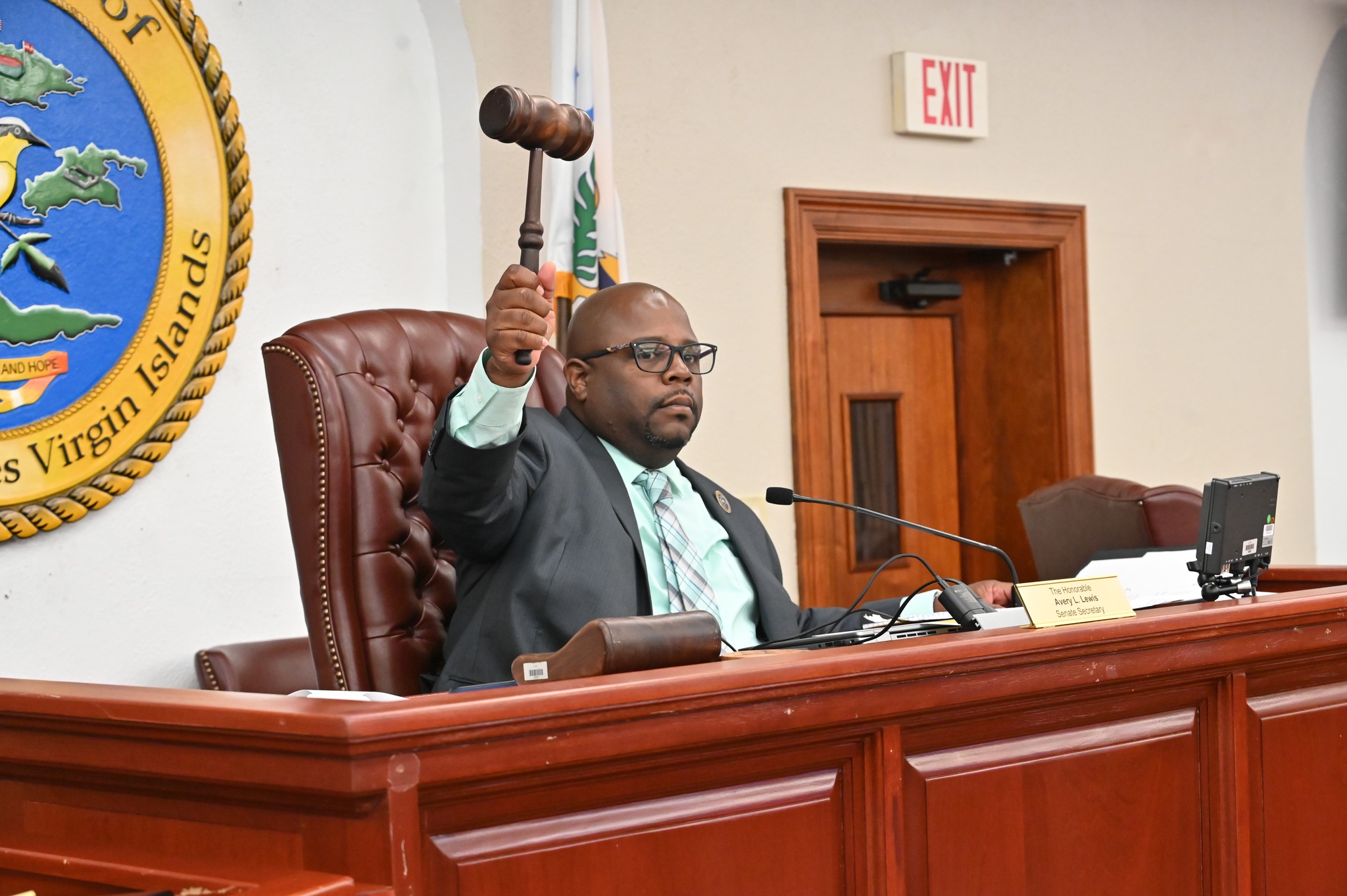
ST. THOMAS, VI — The Committee on Government Operations, Veterans Affairs, and Consumer Protection, chaired by Senator Avery L. Lewis, met at the Earle B. Ottley Legislative Hall. Lawmakers considered measures concerning the disposal of green waste using controlled incineration technologies, a measure concerning the establishment and the operation of the Virgin Islands Lottery, an act honoring an outstanding Virgin Islander for years of service, accessing liabilities on businesses that serve intoxicating beverages to patrons who have overconsumed those beverages, as well as a measure authorizing DLCA to close a business if it presents a threat to public safety. All approved items on today’s agenda will be forwarded to the Committee on Rules and Judiciary for further consideration and action.
Lawmakers considered Bill No. 36-0233, An act amending title 32 Virgin Islands Code chapter 13 relating to the establishment and operation of the Virgin Islands Lottery. The measure was proposed by Senator Avery L. Lewis.
Kevin G. McCurdy, Commissioner of the Virgin Islands Department of Finance spoke in favor of the proposed measure. McCurdy stated that the legislation seeks to formally recognize the Virgin Islands Lottery as the autonomous entity that it has operated as for the last 90 years. The Lottery functions without reliance on central government appropriations, and returns approximately 80 percent of tis proceeds to the territory. The proceeds have supported education, healthcare, GERS, veterans services, and a wide range of community initiatives. McCurdy state that the lottery operates in a revenue-driven environment that requires timely decision making, responsiveness and flexibility.
In testimony delivered by Raymond Williams, Executive Director of the Virgin Islands Lottery, the organization has operated for nearly 90 years, and is likely the only government agency that generates its own revenue without any dependence on central government financial appropriations. 31 lotteries across the United States and Canada operate autonomously. Unlike other autonomous agencies like WAPA or the Port Authority, the Virgin Islands Lottery receives no federal or central government funding. Its current enabling statute lacks the clear independent language required to exempt it from administrative constraints. Williams stated that autonomous status would enable the Lottery to operate in alignment with its responsibilities. Williams stated that it would allow the Lottery to make operational decisions, allocate resources, and execute strategies without delay.
After further discussion, the measure was held in Committee at the call of the Chair.
Policymakers considered Bill No. 36-0232, an act amending Act No. 8018 to authorize the disposal of green waste using controlled incineration technologies, including air curtain incinerators, and for other purposes. The measure was proposed by Senator Clifford A. Joseph, Sr.
Jean Pierre Oriol, Commissioner of the Virgin Islands Department of Planning and Natural
Resources delivered testimony in support of the proposed measure. Oriol’s testimony stated that green waste makes up 30 to 35 percent of the waste stream going to the landfill. After Hurricanes Irma and Maria in September 2017, green waste accounted for more than 20 times the annual amount normally collected at the landfills. FEMA (Federal Emergency Management Agency) has previously informed the Government of the Virgin Islands that it will not ship green waste out of the territory as a response to a major storm. Additionally, Oriol states that the technology would reduce the number of fires that happen unexpectedly at the landfills.
In the last six years, there have been 5 fires at the landfills, the most severe being in September 2023. Oriol’s testimony stated that recent US Environmental Protection Agency regulations no longer require Title V air permits for air curtain incinerators when they burn only clean vegetative materials, wood waste, clean lunger and yard waste. The USVI would not need title V permits because it follows EPA standards. Oriol also mentions that mulching, an alternative method mentioned cannot handle the volume of green waste produced daily in the territory. Mulched material remains bulky, while air curtain incinerators are said to reduce 100 tons of green waste to 3 tons of biochar, a product that farmers can use to improve soil health. Oriol further mentioned that the Anguilla Landfill is expected to reach capacity in three years and the Bovoni Landfill in seven, and banning incineration would worsen landfill shortages and leave the territory vulnerable after major storm events.
Reuben Molloy, Assistant Commissioner of the Department of Health, delivered testimony. Molloy stated that air curtain systems present benefits and risks, particularly for vegetative debris following disasters, as they can reduce waste accumulation and present diseases, decrease fire risk and improve sanitation. However, he stated that the benefits must be balanced with potential air quality impacts, including particulate matter exposure to nearby communities. Molloy voiced concern about the current system of grinding and stockpiling waste and increasing public health concerns. Molloy stated that regardless of what method was chosen, there should be strict operational controls, limits to vegetative waste, worker protections, air quality monitoring, and immediate reporting of harmful air quality changes. The Department of Health did not endorse any particular method.
Felicia Blyden, a member of Bovoni Bolongo Nadir Community Organization voiced concern about the proposed measure. Blyden’s testimony emphasised that the neigbhorhood is densely populated with residential and commercial areas and that any decision made about waste management must prioritize human health. Residents of the neighborhood have had long standing complaints and dissatisfaction with landfill conditions and fear that industrial scale burning would negatively impact health by worsening respiratory illnesses among children and seniors. Blyden states that the bill lacks essential protections, including clean air quality controls, operational standards, maintenance requirements, and health monitoring measures. Blyden urged the body to focus on sustainable waste diversion strategies such as composting, mulching, and shredding, stating that they pose fewer health risk and align with the Virgin Islands Waste Management Authority’s own long term plans.
Dawn Henry, CEO of the Virgin Islands Environmental Association (VIEA) & Interim
CEO for Island Green Living Association delivered testimony voicing concern about air curtain incinerators pose regulatory, environmental, and public health concerns for the Virgin Islands. Henry’s testimony stated that although ACI’s are allowed under United States’ law, they are regulated mainly by limiting what can be burned rather than by monitoring what they emit. Henry voiced additional concerns stating that the EPA’s recent exemption from Title V permitting does not apply to the Virgin Islands, because the Bovoni and the Anguilla Landfill are already Title V major sources. This means that ACI’s placed there would still require full Title V permits. Henry’s testimony mentions that even when burning clean vegetative material, pollutants that are linked to respiratory illness, cardiovascular disease and cancer can still be emitted by ACI’s. Henry stated that ACI’s are not a sustainable long term strategy and could undermine more beneficial waste management practices. Furthermore, Henry states that the Virgin Islands had already identified composting and decentralized processing as the preferred long term strategy after the 2017 Hurricanes.
Daryl Griffith, Chief Financial Officer of the Virgin Islands Waste Management Authority delivered testimony supporting the proposed measure. Griffth states that the VIWMA continues to face persistent and growing challenges related to the accumulation of green waste, following storms and large scale land scale activities. Griffith stated that between calendar years 2024 and 2025, VIWMA recorded 15 landfill fire incidents territory wide, and that in 2026 to date, there has already been a fire at the Anguilla landfill. Griffith stated that the fires threaten public health, and that the responses are costly. He argues that the air curtain burners (ACBs) are a controlled, federally compliant method to reduce fire risk. Griffth states that the ACBs are a part of a broader integrated strategy that includes new horizontal grinders for mulching, expanded resource recovery and improved public access for green waste drop off. Griffith has stated that feedback from a recent March 2026 town hall has voiced support for the technology. There have been requests for clear communication, maintenance standards, and public demonstrations, which the Authority has stated it incorporating. It concludes that combining the technology with shredding, mulching and controlled burning will reduce methane generation, and will prevent illegal burning and accelerate storm-debris processing, and will extend the life of the territory’s landfills.
After further consideration, the proposed measure was voted upon favorably.
Policymakers also considered Bill No. 36-0009, A Resolution honoring and commending Mr. Steven van Beverhoudt for his years of dedicated service and numerous contributions to the people of the Virgin Islands. The measure wasproposed by Senator Milton E. Potter.
Bernice Turnbull, Former Commissioner of the Virgin Islands Department of Finance delivered testimony in support of the proposed measure. Turnbull highlighted Van Beverhoudt’s 30 years of dedicated service to the United States Virgin Islands. Turnbull described him as a man whose name became synonymous with governmental auditing, as well as integrity, professionalism, and unwavering commitment to ensuring that the Government of the Virgin Islands adhered to proper accounting standards. Turnbull, a long time college of Van Beverhoudt, noted the close working relationship between the Department of Finance and the Bureau of Audit and Control, s saying that Van Beverhoudt consistently upheld rigorous auditing practices and played a key role in maintaining accountability across government operations.
Delia Thomas, the Virgin Islands Inspector General voiced support of the proposed measure. Thomas stated that Van Beverhoudt’s tenure as Inspector General has been characterized by his unwavering dedication to enhancing government operations. He was responsible for issuing at least 74 reports and making 690 recommendations for improvement to various departments and agencies. The investigations initiated under his tenue resulted in 354 counts and 14 convictions.
Thomas stated that he exhibited an unwavering commitment to building an independent and trusted Virgin Islands Inspector General’s Office. Additionally, Thomas stated that Van Beverhoudt dedicated himself to supporting his staff’s professional development to strengthen the work product, which led to 6 employees earning a Certified Fraud Examiner (CFE) designation.
Marsha Dubois, Supervisory Auditor at the Office of the Virgin Islands Inspector General voiced support for the measure. Dubois stated that many employees entered the Office of the inspector General with very limited practical auditing experience. However, under his leadership, it quickly grew, which emphasized ethics, professionalism, and independence from political influence. Dubois stated that through his guidance, staff gained confidence, technical skills, and a deep understanding of their responsibility to protect taxpayers by identifying fraud, waste, abuse and internal control weaknesses across government. Additionally,. Van Beverhoudt’s integrity shaped the culture of the office, which empowered auditors to follow evidence without fear of favoritism and to defend findings with clarity and precision. Dubois stated that his standards continue to guide the department after his departure.
The measure was voted upon favorably.
Policymakers considered Bill No. 36-0113,An act amending title 8 Virgin Islands Code, chapter 4 to assess liability on businesses that serve intoxicating beverages to patrons that have overconsumed the beverages. The measure was proposed by Senator Carla J. Joseph.
H. Nathalie Hodge, Commissioner of the Department of Licensing & Consumer Affairs supported the proposed measure. Hodge stated that the current law, requiring proof that a server provided alcohol to someone “habitually addicted” is outdated, impractical, and creates an unreasonable burden of proof. The proposed measure replaces it with a more realistic standard focused on whether a server continued someone who was obviously intoxicated before a car accident. Hodge stated that the bill is balanced, stating that it protect innocent victims, prevents intoxicated drivers from suing establishments, and limits claims from passengers, except minors under 21. Additionally, Hodge recommends that the Legislature consider requiring responsible alcohol service training, such as ServSave Alcohol for servers in bars, restaurants, and similar establishment. Hodge’s testimony states that many United States’ jurisdictions already require training to help staff identify intoxication, prevent underage service, and reduce alcohol related harm. Hodge said that the bill modernizes liability standards, promotes responsible service, and provides clearer expectations for businesses.
Senators also considered Bill No. 36-0115, An act amending title 27, Virgin Islands Code, chapter 9, subchapter I, section 304 authorizing the Department of Licensing and Consumer Affairs to physically close a business when it finds that the business is causing a nuisance, presents a threat to safety or is disturbing the peace. The measure was proposed by Senator Carla J. Joseph.
H. Natalie Hodge, Commissioner of the Department of Licensing and Consumer Affairs delivered testimony in favor of the proposed measure. Hodge stated that while DLCA currently regulates businesses and enforces licensing laws, the existing framework requires notice and hearings before action can be taken, which limits the Department’s ability to respond quickly when a business is actively creating dangerous or disruptive conditions. The proposed measure would give the Department the ability to act in real time when necessary, which addresses a gap in current enforcement tools. Hodge recommended clarifications in the measure, such as defining “nuisance”, establishing an evidentiary standard based on credible evidence or probably cause, outlining how closure orders should be served, setting a 5 day timeline for administrative hearings, and confirming that emergency closures are temporary until a final determination in made. Hodge urged coordination with VIPD and Fire and Emergency Medical Services to safely enforce closure orders.
Rashida Francis, a resident of St. Thomas voiced support for the measure, stating that the Virgin Islands noise ordinance is not being effectively enforced, leaving many residents exposed to harmful noise levels. Francis notes that consistent exposure to noise levels above 85 decibels can cause hearing loss, the law allows businesses to operate at 90 decibels, which create public health concerns. Enforcement of the law has fallen on residents, who often call VIPD, DOH, and DLCA, to encounter inconsistent responses lack of proper noise measuring equipment and no coordinated system among agencies. Francis states that there are major enforcement gaps. Francis states that residents are not asking for businesses to close, but ask for the law to function as intended, requiring proper documentation, landlord accountability, and proper documentation of complaints, and consideration of noise violations during license renewals. Francis urged the body to pass the measure. Hugo Hodge, a bar owner, voiced concern about the measure, stating that it would be impossible to host an outside event that would not impact an outside community. He voiced the need for balance to be found.
After further discussion, Bill No. 36-0113 and Bill No. 36-0115 were held in Committee at the call of the Chair.
Senators present at today’s Committee hearing included Avery L. Lewis, Novelle E. Francis, Jr. Marvin A. Blyden, Dwayne M. Degraff, Kenneth L. Gittens, Franklin D. Johnson, Alma Francis Heyliger, Ray Fonseca, Carla J. Joseph, Clifford A. Joseph, Sr., Kurt A. Vialet, and Milton E. Potter.
The Division of Public Affairs is committed to providing the community with accurate information on legislative proceedings and other events at the Legislature of the Virgin Islands. Visit legvi.org.
###
Related Content
LAWMAKERS VOTE ON NOMINATIONS, LEASE AGREEMENTS, ZONING REQUESTS, AND BILLS DURING LEGISLATIVE SESSION
August 26, 2026
ST. THOMAS, VI — Members of the 36th Legislature, led by Senate President Milton E. Potter, convened in the Earle B. Ottley Legislative Hall for Legislative Session. Lawmakers voted on nominations, easements, zonings, lease agreements, and bills. The items on the agenda will be forwarded to the Governor of the Virgin Islands for further consideration and action. The...
LEGISLATURE HOSTS PERMA PLAQUE CEREMONY
August 25, 2026
ST. CROIX, VI – Members of the 36th Legislature of the Virgin Islands, led by Senate President Milton E. Potter hosted a perma plaque ceremony at the Frits E. Lawaetz Legislative Conference Room. In his opening remarks, Senate President Milton...
COMMITTEE HEARS TESTIMONY ON UPDATED FISCAL YEAR 2027 BUDGET AND SEVERAL PROPOSED BILLS
August 20, 2026
ST. THOMAS, VI - The Committee on Budget, Appropriations, and Finance, led by Senator Novelle E. Francis, Jr. met in the Earle B. Ottley Legislative Hall to receive testimony from the governor’s financial team regarding the update of the Fiscal Year 2027 budget. Committee members also considered two measures relating to...